Documentation Index

Fetch the complete documentation index at: https://docs.suprsend.com/llms.txt

Use this file to discover all available pages before exploring further.

Add APNs configuration on SuprSend dashboard

On the SuprSend dashboard, go to vendor page from side panel, select iOSpush and fill in below details. You’ll get all these information from Apple developer account
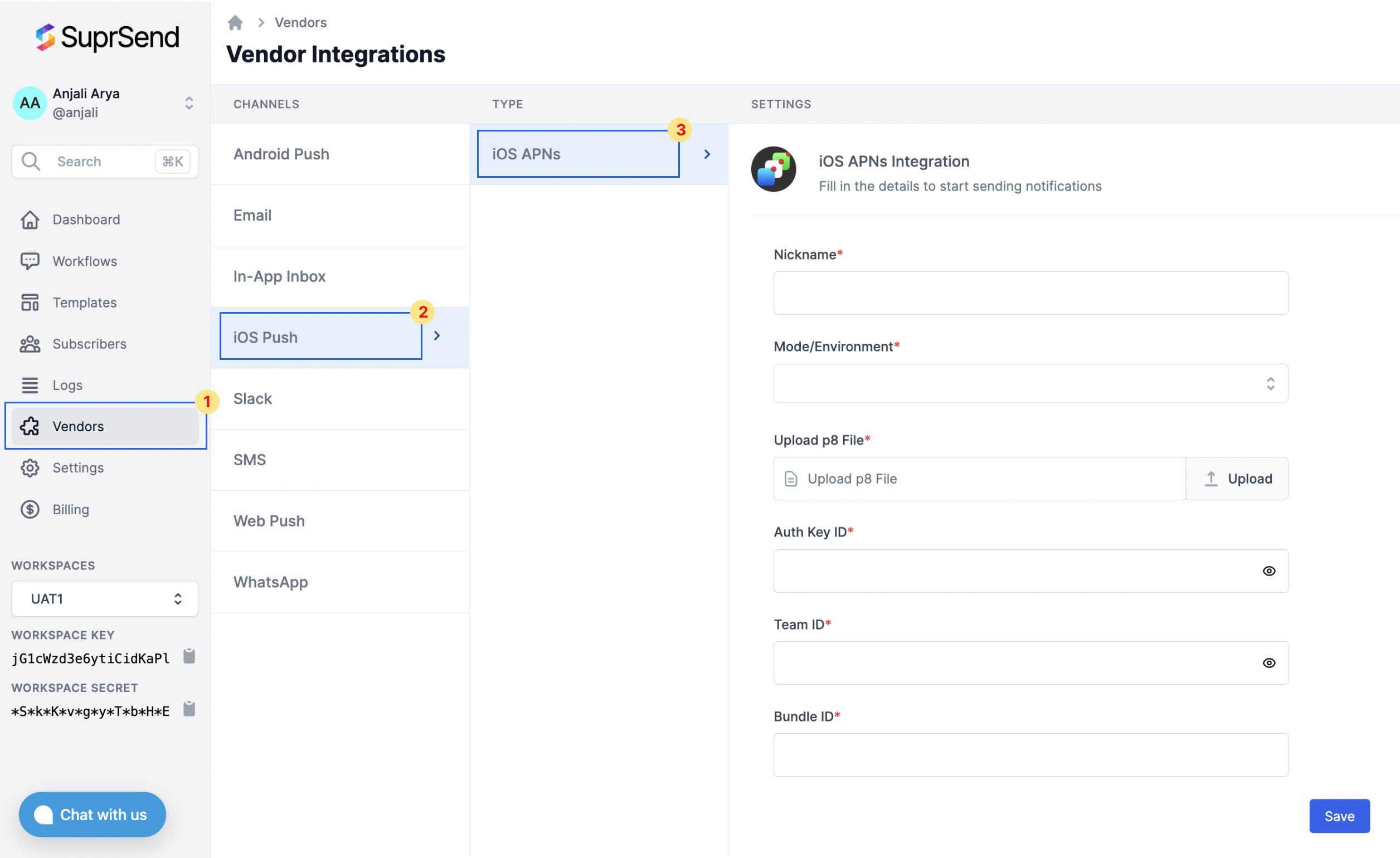
Form FieldDescription
NicknameYou can give any name which may help you to identify this account easily
Mode/EnvironmentSelect Production if you’re testing the app via TestFlight or running the live App Store build. Select Development if you’re testing the app locally through Xcode (debug build on a connected device or simulator). The mode here must match the build type you’re testing with - see the warning below.
Upload p8 fileYou’ll get .p8 key file from your apple developer account. Refer section below to see how to generate .p8 file
Auth Key IDAuth key ID is a part of the filename of your .p8 file. Refer section below to see how to get Auth key ID
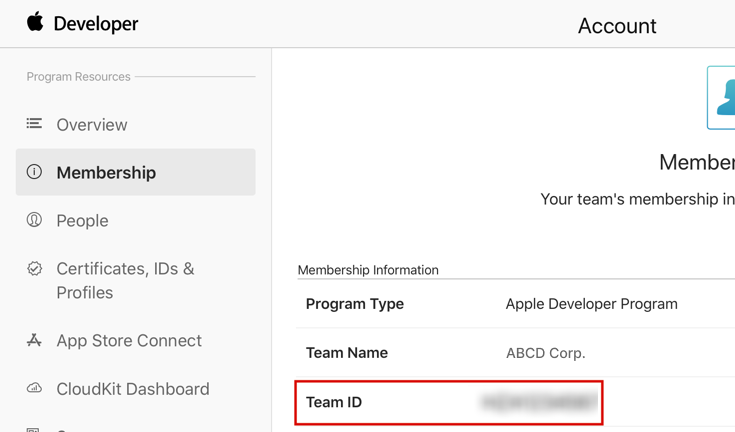
Team IDYou’ll get Team ID from your apple developer account. Refer section below to see how to get Team ID
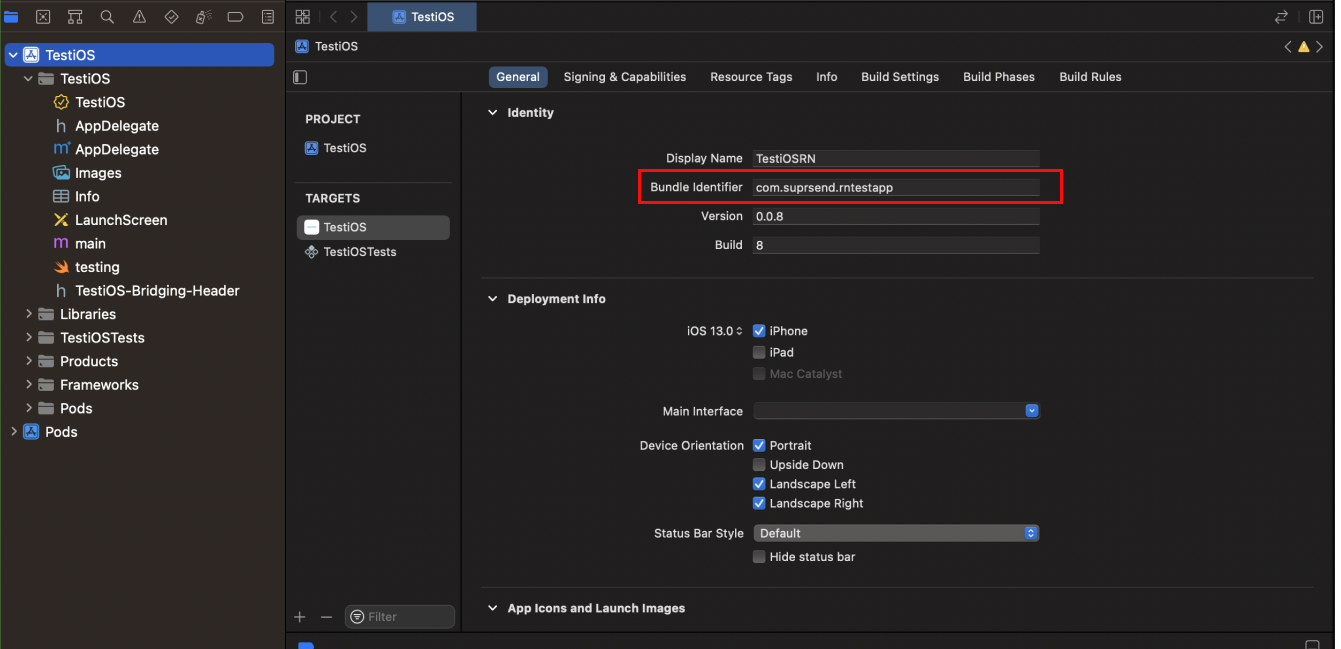
Bundle IDBundle ID is a unique identifier of your app. SuprSend will require this key to identify your app for sending push notification.Refer section to see how to get Bundle ID
Mode/Environment must match your build type. This is the most common reason iOS pushes fail to deliver. If the mode doesn’t match the build, APNs rejects the push with a BadDeviceToken error (visible in SuprSend logs as the delivery failure reason) because sandbox and production tokens are issued by different APNs endpoints and aren’t interchangeable.
  • Set Production when testing on TestFlight builds or the live App Store build (these use production APNs tokens).
  • Set Development when testing locally through Xcode - i.e., a debug build run on a physical device or simulator (these use sandbox APNs tokens).
If you flip these by mistake (e.g., Production mode while debugging in Xcode, or Development mode on a TestFlight build), the device will register a token but every push will fail with BadDeviceToken. To fix it, switch the vendor mode to match the build you’re testing.

Generate .p8 key file and Auth key ID

1

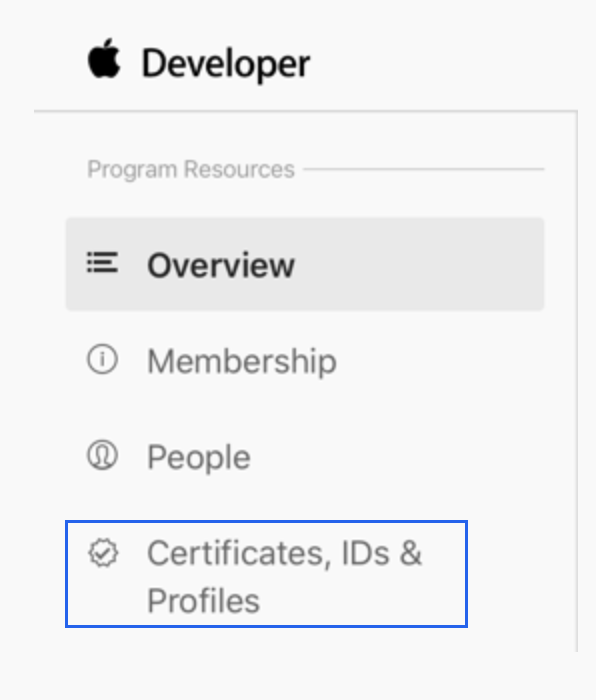
To generate a .p8 key file, login to your Apple developer account page

To generate a .p8 key file, login to your Apple developer account page, then select Certificates, IDs & Profiles.
2

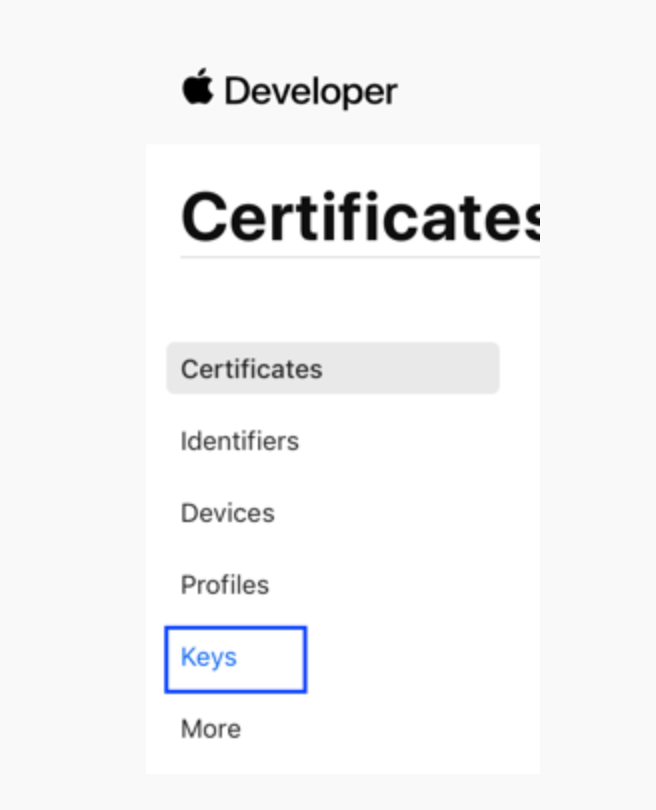
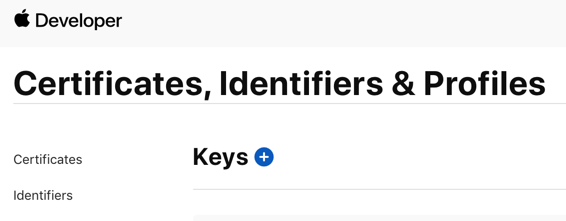
Select `Keys`

Under Certificates, IDs & Profiles section, select “Keys”
3

Add a new key

Click on “+” button next to keys to add a new key
4

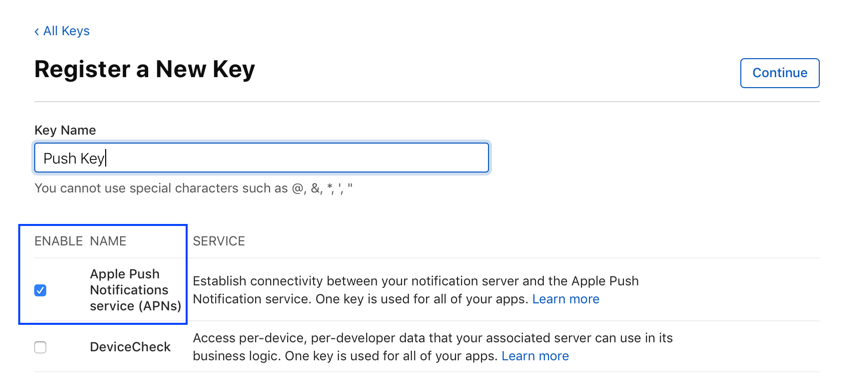
Type in your key name and check the Apple Push Notification service

On the new key page, type in your key name and check the Apple Push Notification service (APNs) box, then click “Continue” and “Register”.
5

Download the p8 key file

Once the key is generated, download the p8 key file by clicking on “Download
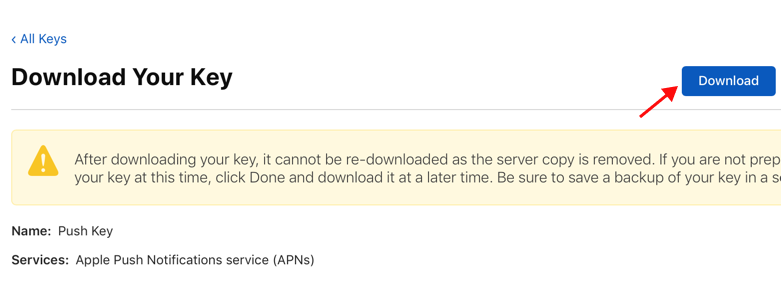
The Auth Key filename will look like this: **AuthKeyABCD1234.p8**, the **ABCD1234** is the Key ID for this key, add this key ID in Auth key ID field on Vendor configuration page

How to get team ID

You can get team ID from your Apple developer account membership page
How to get bundle ID

You can get this ID from your app project